In Dallas, concrete work rarely fails because of the pour itself. It fails because of coordination gaps before the truck ever shows up. On commercial sites from Stemmons Corridor to Plano Parkway, scheduling conflicts, soil surprises, and access issues quietly drive up cost and risk.
A full-service concrete supplier that handles delivery, excavation, and site prep under one scope removes those friction points and protects your timeline.
Here is how that integrated approach creates measurable value, and how we help Dallas-area projects stay inspection-ready from day one.
Key Takeaways
- Integrated concrete, excavation, and site prep reduce coordination risk on Dallas commercial sites.
- Local soil knowledge directly affects slab performance and long-term cost.
- Logistics control matters in North Texas traffic, weather, and permitting environments.
- Single-source documentation helps projects pass inspections and close out faster.
Single-Source Accountability Reduces Risk
When excavation, grading, and concrete delivery are split across vendors, accountability gets diluted fast. If subgrade fails compaction near I-30 or a pour misses its window due to traffic on LBJ, finger-pointing follows.
With a single partner responsible for the entire scope, issues are owned and corrected in real time. That matters in Dallas, where expansive clay soils demand precise moisture control and compaction sequencing.
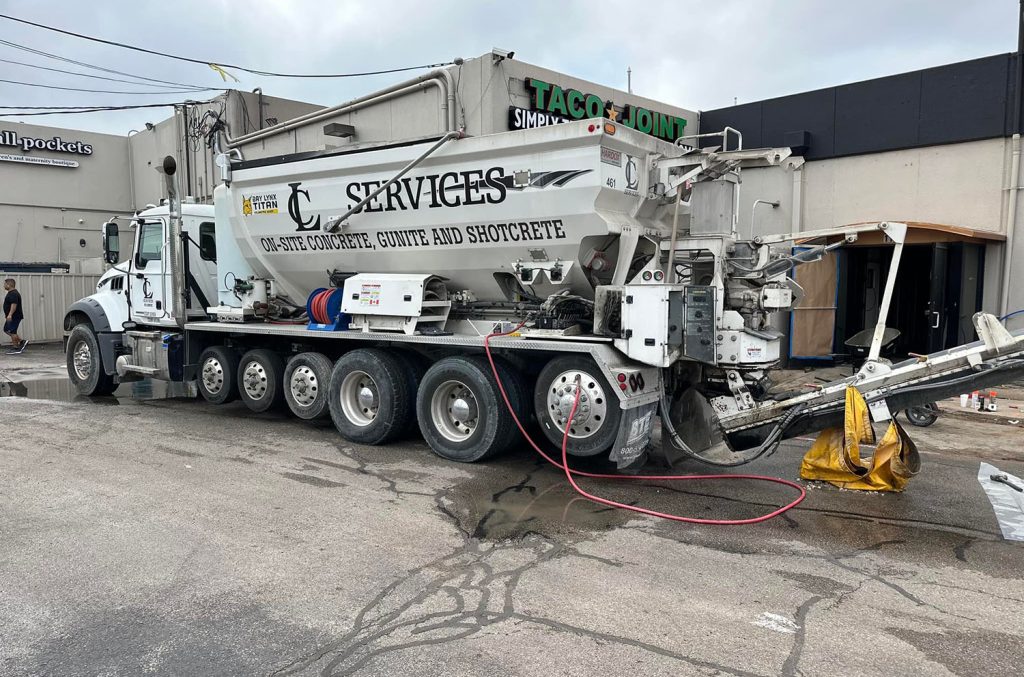
Our teams at LC Services manage those transitions so responsibility is clear, documentation is clean, and corrective work does not stall inspections.
Schedules Stay Intact Despite Dallas Logistics
Dallas logistics are unforgiving.
Concrete delivery windows collide with peak traffic on US-75, site access is tight in Uptown, and large retail centers off Preston Road often require after-hours work. A full-service supplier coordinates excavation progress with batch plant availability and trucking routes.
That alignment reduces idle crews, avoids short loads, and keeps pours aligned with weather patterns that shift quickly in North Texas. Fewer handoffs mean fewer delays when storms roll through or utility locates take longer than expected.
Better Subgrade Prep Means Longer Slab Life
Subgrade quality determines slab performance. In Dallas County, high plasticity clays expand and shrink with seasonal moisture, stressing slabs and joints.
When the same provider handles excavation and concrete, subgrade prep is designed around the mix, reinforcement, and load requirements.
That includes proof-rolling, moisture conditioning, and base selection suited for warehouse traffic near DFW Airport or parking structures in Addison. The result is flatter floors, fewer callbacks, and longer service life.
Compliance Is Built In, Not Added Later
Commercial projects face layered requirements. City of Dallas permitting, ADA accessibility, OSHA safety plans, and TxDOT standards near rights-of-way all intersect on concrete scopes. A full-service partner integrates compliance into planning rather than reacting at inspection.
That means proper setbacks, ramp slopes, joint layouts, and documentation are handled before crews mobilize. Owners and GCs avoid rework, and inspectors see a coordinated scope that aligns with approved plans.
How to Decide if a Full-Service Concrete Partner Is the Best Fit for Your Project
Before committing to a full-service concrete partner, it is important to understand when that integrated approach delivers the most value and how to evaluate whether a provider is truly equipped to manage the full scope of your project.
Evaluate Scope Complexity and Interfaces
Start by mapping interfaces. If your project includes cut and fill, utility coordination, paving ties, or phased pours around tenants, integration pays off.
Retail pads in Frisco or industrial yards in South Dallas often involve tight sequencing with other trades. A full-service supplier simplifies those interfaces by managing excavation tolerances and pour timing together.
If your scope is limited to a simple replacement with clear access, the value may be lower. Complexity is the deciding factor.
Review Local Experience and Soil Knowledge
Dallas is not a generic market. Ask how the provider handles expansive clay, groundwater near the Trinity River, or limestone shelves common north of Loop 12. Look for experience with local testing protocols and coordination with third-party geotechnical firms.
A partner that understands Dallas soils will adjust excavation depth, base materials, and curing practices to match site conditions, not default assumptions.
Confirm Fleet, Crew, and Plant Coordination
Value depends on control. Verify that excavation crews, trucks, and concrete supply are coordinated under one schedule. Ask about backup plans during peak demand in summer when pours stack up across Plano and Irving.
A full-service provider should demonstrate how they manage truck spacing, on-site placement, and finish crews to avoid cold joints and downtime. This is especially important for large placements or night pours required by nearby businesses.
Align on Documentation and Closeout Needs
Commercial stakeholders need records. Submittals, mix designs, compaction reports, and inspection sign-offs must align.
In Dallas, missing paperwork can delay certificates of occupancy.
A full-service partner should outline how documentation flows from excavation through final pour, including coordination with city inspectors and third-party testing. If your project demands tight closeout timelines, this alignment alone can justify the integrated approach.
Plan Your Concrete Scope the Right Way
When excavation, site prep, and delivery are treated as one system, Dallas projects run smoother and cost less to manage. At LC Services, we help commercial teams simplify scopes, protect schedules, and stay inspection-ready across North Texas.
If you are planning a slab, paving package, or structural pour, schedule a site walkthrough with us. We will review access, soils, logistics, and compliance before numbers are finalized, so your concrete scope supports the rest of the job.
Frequently Asked Questions
How do you coordinate excavation and concrete on active Dallas sites?
Coordination starts with a joint schedule that ties excavation milestones to concrete availability and traffic patterns common on corridors like US-75 and I-35. Our crews stage work to maintain access for other trades, follow OSHA site safety requirements, and adjust pour timing to avoid peak congestion, which keeps operations moving without disrupting tenants or neighboring properties.
What permits or inspections should we expect for commercial concrete work in Dallas?
Most projects require City of Dallas permits tied to site plans, with inspections for subgrade, forms, reinforcement, and final placement. ADA slope and access requirements often apply, and TxDOT standards may come into play near public rights-of-way. Our process accounts for these checkpoints early, so inspections align with the construction sequence.
How does a full-service approach affect overall project cost?
Upfront pricing may appear higher than a single-scope bid, but the total cost is often lower. Savings come from fewer delays, reduced rework due to subgrade issues, and less administrative time managing multiple vendors. In Dallas markets where labor and truck availability fluctuate seasonally, that predictability has real financial value.
What timelines are realistic for excavation through final pour?
Timelines depend on access, soil conditions, and weather. For a typical commercial slab in the Dallas area, excavation and prep may take several days, followed by scheduled inspections and a coordinated pour. Because all phases are planned together, transitions are faster, and idle time between steps is minimized.