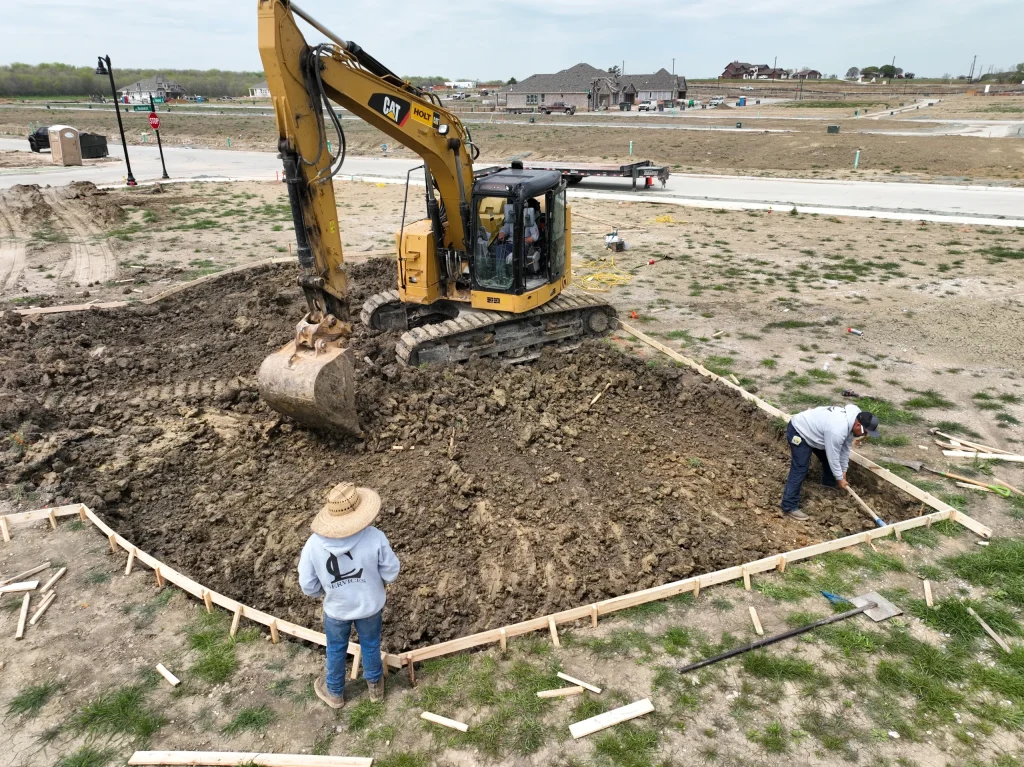
 If you are planning a commercial build in Dallas, utility excavation is not something to push to the back of the schedule. In North Texas, utilities often run older, deeper, or in unexpected corridors, especially near major roadways like I-35E, Loop 12, or along older industrial zones south of the Trinity River.
Getting utility excavation handled early protects your timeline, keeps inspections moving, and prevents costly redesigns once vertical construction starts.
Here is how utility excavation fits into early site development and what to confirm before moving forward.
Key Takeaways
- Utility excavation is a foundational step in Dallas commercial site development that supports design, safety, and scheduling.
- Early excavation helps confirm utility locations, reduce risk, and keep inspections moving forward.
- Dallas soil conditions and permitting requirements make upfront planning especially important.
- Coordinated utility work protects budgets and prevents delays later in construction.
How Utility Excavation Fits Into the Early Site Development Process in Dallas
Utility excavation is one of the first physical steps that connects planning to real progress on site. In Dallas commercial projects, these early decisions shape everything that follows.
Verifying Utility Locations and Depths
Dallas sites often involve a mix of legacy utilities and newer infrastructure, especially near older retail corridors or infill parcels.
Utility excavation confirms exact locations and depths of water, sewer, gas, electric, and telecom lines before foundations or paving begin.
This matters in Dallas, where soil movement and past roadway expansions can shift utilities from recorded plans, creating conflicts if left unchecked.
Coordinating With Local Utility Providers
Early excavation allows coordination with Dallas Water Utilities, Oncor, and regional telecom providers before schedules tighten.
Commercial projects near office parks or industrial zones often require service upgrades or relocations.
Addressing this during early site development helps avoid mid-project shutdowns or after-hours work requests that drive up labor costs.
Supporting Civil and Structural Design
Utility excavation gives engineers real-world data to finalize grading, drainage, and foundation design.
In areas with expansive clay soils common across Dallas County, utility elevations affect slab design and stormwater flow.
Early excavation prevents last-minute design changes that can delay permitting or trigger re-submittals with the City of Dallas.
Reducing Risk Before Heavy Construction Begins
Excavating utilities first lowers the risk of damaging active lines once heavier equipment moves in.
This is especially important near multi-tenant commercial sites or medical offices where service interruptions are not an option.
Early utility work keeps the project compliant with OSHA safety expectations and reduces liability exposure.
Keeping Inspections and Permits on Track
Utility excavation aligns with early inspections required by the City of Dallas and surrounding municipalities.
Confirming connections and clearances early helps inspectors sign off without delays. This keeps your overall site development sequence moving, from rough grading to paving and vertical construction.
What to Confirm Before Moving Forward With Utility Excavation and Site Prep Work
Before excavation starts, a few confirmations can make the difference between a smooth phase and a stalled project. Dallas commercial sites have unique regulatory and logistical considerations that need to be addressed upfront.
Existing Utility Records and Site Surveys
Utility maps are a starting point, not a guarantee. Many Dallas commercial properties have undergone partial redevelopments or utility reroutes over the years.
Confirming records against current site surveys reduces surprises once excavation begins and helps crews work efficiently around active services.
Permitting and Right-of-Way Requirements
Some utility work may extend into public right-of-way areas, especially near major corridors or shared access drives. The City of Dallas requires permits for this work, and approval timelines can vary.
Confirming permit needs early avoids downtime while crews wait for authorization to proceed.
Soil Conditions and Excavation Methods
Dallas soils expand and contract with moisture changes, which affects trench stability. Confirming soil conditions helps determine whether shoring, trench boxes, or alternative excavation methods are needed.
This protects worker safety and prevents cave-ins that could impact nearby structures or roadways.
Coordination With Other Trades on Site
Utility excavation should align with grading, concrete, and paving schedules.
On larger commercial sites like retail centers or warehouse developments, poor coordination can lead to rework or damaged installations.
Confirming sequencing ensures utilities are protected as the site progresses.
Access, Staging, and Business Impacts
Many Dallas commercial projects occur in active business districts or near occupied buildings. Confirming access routes, equipment staging areas, and work hours helps minimize disruption.
This is especially important for office parks, medical facilities, or logistics hubs that rely on daily operations.
Ready to Plan Utility Excavation the Right Way
Delays during early site development are expensive and avoidable.
At LC Services, we help Dallas commercial developers and contractors plan and execute utility excavation that supports inspections, schedules, and long-term performance.
If you are preparing a site or reviewing early construction phases, let’s walk the project together and confirm what needs to happen first. Call our team to schedule a site walkthrough and get clear direction before excavation begins.
Frequently Asked Questions
Do we need utility excavation even if the site was previously developed?
Yes, because many Dallas commercial sites have older or partially abandoned utilities that do not appear on current records. Confirming locations through excavation helps avoid conflicts and supports updated service requirements.
How long does utility excavation typically take on a Dallas commercial site?
Timelines vary based on utility complexity and permitting, but most early utility excavation phases take several days to a few weeks. Scheduling is influenced by coordination with Dallas Water Utilities, inspections, and soil conditions.
Are permits required before starting utility excavation in Dallas?
Permits are often required, especially if work impacts the public right-of-way or connects to municipal systems. Local regulations and inspection schedules must be confirmed before excavation begins.
Can utility excavation happen at the same time as grading work?
In many cases, it can, but sequencing must be carefully planned. Coordinating excavation with grading helps protect installed utilities and ensures compliance with safety standards and inspection requirements.